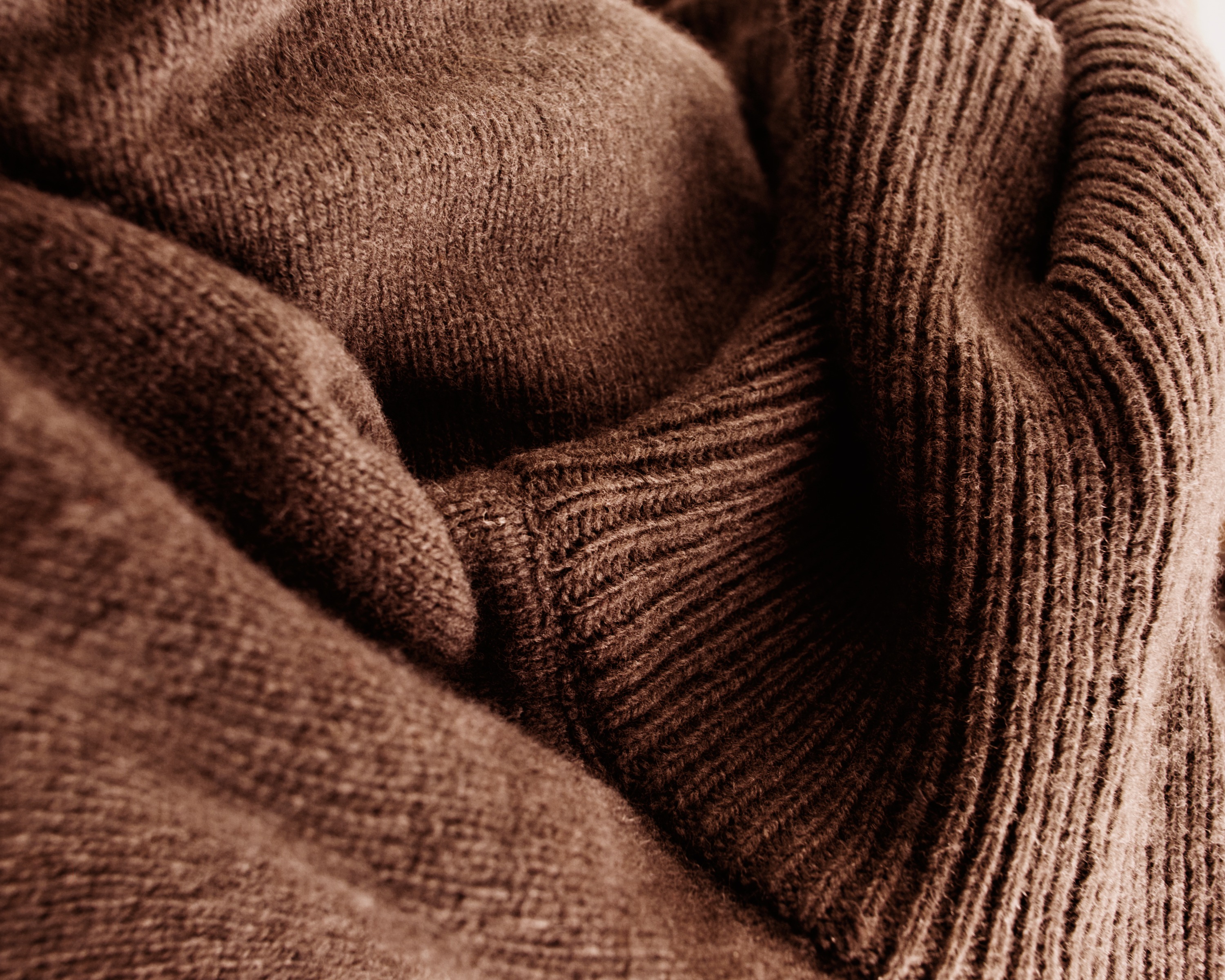
Wool doesn't need frequent washing.
Wool resists odour naturally. Between washes, airing your piece for a few hours does most of the work. This is one of the reasons virgin wool is worth choosing. Less intervention, longer life.
The small amount of care needed is very occasional, so when a wash is needed, the method matters.
How to wash
If you use a machine, choose the wool or delicate cycle at 30°C with a low spin, with a gentle wool detergent.
Not all machines handle wool well, so for extra care try the simple pleasure of hand washing.
To hand wash, use cool to lukewarm water, no more than 30°C. Use a gentle wool detergent or a small amount of mild soap. Submerge the garment and move it gently through the water. Do not wring, twist, or scrub. Wool fibres felt when agitated under heat and friction.
After washing
Press water out gently. Do not wring. Lay the piece flat on a clean towel and reshape it to its original dimensions while damp. This step matters. Wool sets into whatever shape it dries in.
Dry flat, away from direct heat or sunlight. Do not tumble dry. Do not hang while wet so the weight of the water does not pull the knit out of shape.
Ironing and storage
If needed, iron at a low temperature on the reverse side, with a pressing cloth between the iron and the wool. Steam is your friend here.
Store folded, not hung as a hanger puts sustained weight through the shoulders and will stretch the knit over time. Folded in a drawer or on a shelf, the structure stays even.
One more thing
A fabric comb or a lint shaver handles pilling quickly and cleanly. Pills are normal on any wool knit and don't indicate a problem with the piece. Remove them and the surface underneath is fine.